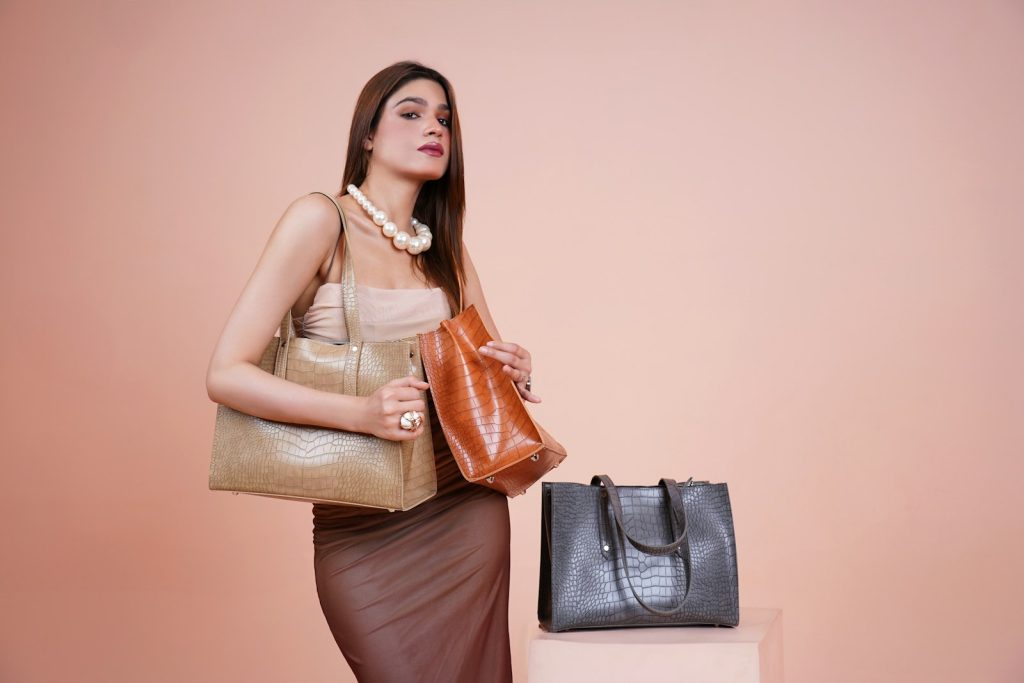
Honest sourcing note: “Crocodile”, “alligator” and “caiman” are different species. The premium crocodilian is saltwater crocodile (Crocodylus porosus); Nile crocodile (C. niloticus) is very high but usually below porosus; American alligator (Alligator mississippiensis) is a separate prized category; caiman is the entry tier. We label species accurately and never sell embossed calf as exotic. Genuine crocodilian is CITES-regulated (typically Appendix II, farmed/ranched, source codes C/F/R); international orders ship with documentation, and you are responsible for your country’s import rules — this is general information, not legal advice. Prices are indicative ranges (mid-2026); final pricing is by quote. Luxury houses are referenced only as neutral examples — we have no affiliation. We are an independent authority and sourcing desk and connect you to vetted makers.
Belly vs hornback crocodile describes two different cuts of genuine crocodile skin: the smooth, square-scaled belly cut and the raised, ridged hornback over the spine. For a bag, belly cut gives a cleaner, dressier look, while hornback gives a more dramatic, armored feel; both can be superb if the species, grading, and construction are done correctly.
What “belly” and “hornback” crocodile really mean
In the trade, “belly” and “hornback” are not species. They are cutting styles taken from different parts of the same crocodile:
– Belly cut crocodile bag: Made from the flat abdominal area and flanks, with relatively even, rectangular scales. This is the classic high-luxury look you see from top houses using saltwater crocodile (Crocodylus porosus) and Nile crocodile (Crocodylus niloticus).
– Hornback crocodile bag: Made from the dorsal (back) area along the spine, with raised, bony scutes (“horns”). This is more aggressive, textured and visually powerful.
Most commercial luxury-grade crocodile bags are:
– CITES Appendix II (porosus, niloticus, some alligator populations)
– Legally traded under captive-bred or ranched source codes like C, F, R, with country-specific export permits and re-export controls.
That legality framework applies the same way to belly and hornback; what changes is the cut, aesthetics, usable area, and therefore how the bag is designed and priced.
Species: porosus vs niloticus vs alligator vs caiman
Before choosing belly or hornback, you need to understand species. Different reptiles, different scale patterns, different value.
Crocodile species used for high-end bags
The principal species in upper-tier bags today are:
– Saltwater crocodile (Crocodylus porosus)
– Found in Australia, parts of Southeast Asia and the Pacific.
– Very small, regular belly scales with minimal pitting.
– Tends to command the highest prices at a given bag size and grade.
– Nile crocodile (Crocodylus niloticus)
– Ranched in several African countries and Madagascar.
– Slightly larger belly scales, more pronounced grain than porosus.
– In quality tanning, used by major luxury houses for both belly and hornback.
Both are traded under CITES Appendix II, with legal captive-bred/ranched skins exported under the appropriate source and origin codes. Compliance is paperwork-heavy but standardized across the industry.
American alligator and caiman: not “crocodile”
Two more reptiles are frequently (and incorrectly) lumped into “crocodile” marketing:
– American alligator (Alligator mississippiensis)
– Native to the United States; managed on a sustainable-use model.
– CITES Appendix II for trade control, though the wild population is healthy.
– Belly scales are relatively large and pebbled, less rectangular than porosus.
– Premium in its own right, but it is not crocodile and should be labelled “alligator,” not “croc”.
– Caiman (several Caiman species)
– Generally smaller animals with heavier osteoderms (bone in the skin).
– More rigid, often more crack-prone if not well tanned.
– Much cheaper than porosus/niloticus/alligator.
– Used for budget “exotic” goods; respectable at the right price, but not comparable to top crocodile.
At Crocodile Leather Bags we always label by correct species and Latin name. A hornback crocodile bag in porosus is fundamentally different from a hornback bag in caiman, even if both have “spiky” backs.
How belly vs hornback affects the look of a bag
Cut selection changes the personality of a bag far more than many buyers expect.
Belly cut: dress, precision, and panel symmetry
Visual character
– Flat, even, rectangular belly scales.
– Cleaner reflections; shows off polish, aniline dyes, and subtle hand-rubbed finishes.
– Easier to match panels left–right, so front and back can be nearly mirror-symmetrical on high-grade builds.
Best suited for
– Top-handle totes and Kelly/Birkin-type shapes.
– Minimalist clutches and envelope bags.
– Briefcases and structured day bags.
– Pieces where leather is the “fabric” and the silhouette is strict.
Most collectors who want a first serious exotic choose belly cut crocodile because it reads immediately as “high luxury” even from a distance.
Hornback: impact, relief, and natural asymmetry
Visual character
– Raised dorsal scutes create a three-dimensional ridge.
– Natural asymmetry: the horn clusters are rarely perfectly mirrored side-to-side.
– Light breaks across the high points, so it photographs more aggressively and looks more rugged.
Best suited for
– Statement totes and satchels with the ridge running vertically or horizontally.
– Casual or “rock” pieces—think motorcycle jackets translated into bag form.
– Compact unisex shapes where texture is the main story.
Hornback crocodile bags almost always read more casual than belly, even when made in formal colors like black or deep navy.
Technical comparison: belly vs hornback for bags
Below is a high-level comparison for porosus/niloticus bag builds, mid-2026 norms for well-tanned captive-bred skins:
| Aspect | Belly cut crocodile bag | Hornback crocodile bag |
|---|---|---|
| Main panel area | Flat abdominal/flank scales | Dorsal spine with raised scutes |
| Typical look | Clean, dressy, symmetrical | Textured, bold, more casual |
| Species usually used | Porosus, niloticus, alligator | Porosus, niloticus, some caiman |
| Average skins per medium bag | 2–3 full skins | 1–2 hornback sections + belly/flank for sides |
| Panel matching difficulty | High but predictable; easier symmetry | High; natural asymmetry, horns must align |
| Wear characteristics | Even wear; edges take abrasion first | Scutes can polish on tips; valleys stay matte |
| Comfort in hand | Smooth, “silky” in high-finish porosus | Pronounced texture, tactile “grip” |
| Typical usage context | Boardroom, formal events, conservative offices | Casual, creative industries, off-duty, collectors |
| Price position (like-for-like size/grade) | Often higher if using top belly grades | Can be similar; hornback sometimes priced slightly lower or higher depending on demand and cut |
Pricing, as always, is final by quote and depends on species, size, grade, finish, and build complexity.
Grading and panel usage: what actually goes into a crocodile bag
Grades: why “first grade belly” matters
Professional tanneries grade crocodile skins primarily on:
– Natural defects: scars, bites, belly scratches, “growth marks”.
– Scale regularity: uniform, aligned squares on belly; consistent horn heights on back.
– Size: a 40–45 cm wide belly produces very different panels from a 30–35 cm wide one.
For premium bags:
– Front and back panels usually demand Grade I or close to it, especially for smooth belly.
– Side gussets, tabs, straps may use Grade II–III as long as visible areas remain clean.
Hornback introduces additional constraints:
– You need the spine ridge placed perfectly on the panel, not off to one side.
– The height and spacing of the horns must work with the pattern—e.g., not interfering with flap folds or hardware.
How many skins per bag?
This varies by bag size and pattern layout, but as a practical 2026 guideline for porosus/niloticus:
– Small flap/mini bag (18–22 cm)
– Belly: 1–2 skins (if large enough and exceptionally clean) or 2 smaller.
– Hornback: often 1 hornback section for the flap/body + belly/flank from the same or a second skin for gussets and straps.
– Medium top-handle (25–30 cm)
– Belly: typically 2–3 skins to achieve symmetrical panels and internal reinforcement.
– Hornback: 1–2 hornback sections plus additional belly/flank for sides and handle.
– Large tote (32–40+ cm)
– Belly: 3–4 skins if the design demands consistent scale size across front/back/gussets.
– Hornback: 2–3 hornback sections (depends on how much spine is visible) plus supporting panels.
Species with smaller usable bellies (some niloticus lots, smaller alligator) may push these numbers up. Caiman hornback, being smaller and more irregular, generally takes more skins for the same visual effect.
If you want a spec-driven quote (species, size, estimated skins per bag), you can plan your trip with us via email or WhatsApp; we’ll walk through options and constraints.
Construction differences: belly vs hornback
Pattern cutting and thickness
Belly and hornback sections behave differently under the knife and on the sewing machine:
– Belly cut
– More uniform thickness; can be split (thinned) consistently.
– Ideal for precise edge painting and fine turning at corners.
– Accepts tight folded edges on flaps and handles.
– Hornback
– Bony scutes mean patchy thickness. Often skived from the flesh side to even things out, but the horns themselves retain height.
– Requires pattern adjustments: you don’t place a fold or a hinge exactly on the highest scute cluster.
– Stitching must avoid hard bone; stitches are routed in the “valleys” between horns.
A well-made hornback crocodile bag tends to look more three-dimensional because the pattern and stitching work around the natural topography rather than fighting it.
Lining, reinforcement, and structure
High-end crocodile bags—belly or hornback—aren’t just a single layer of exotic skin:
– Lining is often goatskin, calf, or high-grade suede, chosen to complement the outer leather.
– Interlinings and stiffeners give structure and protect the exotic skin from stress at hinges, handle attachments, and hardware points.
With hornback, reinforcement needs to account for:
– Slightly reduced flexibility around heavily horned zones.
– Potential stress concentrators where dorsals transition to flat belly areas.
A builder experienced with hornback will re-balance the pattern so that strain concentrates on flatter, better-supported portions of the hide.
Finishes: matte, semi-matte, glazed on belly vs hornback
Finishing (the last stages of tanning and surface treatment) changes both appearance and hand-feel.
Belly finishes
Common in 2026:
– Matte belly crocodile
– Soft, slightly velvety hand.
– Understated, excellent for business and collectors who prefer discreet luxury.
– Shows patina and minor marks more readily, but those can be part of the charm.
– Semi-matte / satin
– A balance between matte and full glaze.
– Versatile; often the sweet spot for daily-wear bags.
– Glazed belly (high polish)
– Achieved by mechanical glazing (often with agate rollers) plus finishing chemistry.
– High reflectivity, dramatic in darker colors and jewel tones.
– Fine scratches can be visible; needs mindful wear.
Porosus belly in a deep, well-executed glaze is where you see the classic mirror-like luxury look associated with top-market crocodile bags.
Hornback finishes
Hornback can be finished similarly—matte to high gloss—but the effect is different:
– The horn tips catch more light, so even in matte they can appear slightly shinier over time.
– Heavy glazing can visually soften the texture, making it read less aggressive.
– Many collectors prefer semi-matte hornback, which keeps definition in the valleys while giving the horns a quiet sheen.
Dye penetration and color uniformity are more complex over hornback, because thickness and density vary. Expect more natural variation; that’s part of the appeal.
Durability and care: does belly or hornback last longer?
All genuine crocodile and alligator is durable when properly tanned and used, but how it wears differs slightly.
Wear patterns
– Belly cut crocodile
– Wears most at edges, corners, and high-contact zones like handle bases.
– Glazed finishes can show fine hairline scratches; matte hides them better.
– With correct care, decades of life are realistic for regular rotation use.
– Hornback crocodile
– Raised scutes may polish on the tops as they rub against clothing or hands, especially on matte finishes.
– Valleys can accumulate dust; occasional gentle cleaning is helpful.
– The underlying hide is robust; failure points are usually stitching, hardware, or structural components rather than the exotic skin itself.
Caiman hornback, because of heavier ossification and often lower-cost tanning, can be more prone to cracking if dried out, so conditioning discipline matters more in that category.
Care basics (applies to both cuts)
– Avoid prolonged soaking. Light rain is usually fine; wipe off and air-dry at room temperature.
– No aggressive heat: no hairdryers, radiators, direct sun baking.
– Condition sparingly with a reputable exotic-leather conditioner; over-conditioning can dull finishes, especially glazed belly.
– Store structured bags filled (acid-free stuffing), in a breathable dust bag, away from high humidity.
If you need care advice for a specific bag (finish/species), we can give tailored suggestions via WhatsApp through our plan your trip page.
Price ranges: belly vs hornback crocodile bags (mid‑2026)
Market pricing fluctuates based on raw skin costs, tanning, labor rates, and brand positioning. As of last verified June 2026, broad retail ranges for well-made, fully genuine exotic (not embossed) bags are:
- Entry caiman hornback bag (small/medium)
- Approx. USD 700–1,800, depending on build quality and brand.
- Nile crocodile (niloticus) belly cut, small bag
- Approx. USD 2,500–6,000+ depending on brand, finish, and grade.
- Niloticus hornback bag, small/medium
- Approx. USD 2,000–5,000+; hornback sometimes priced slightly below belly at similar sizes, but design and brand can reverse that.
- Porosus belly cut, small/medium high-end bag
- Approx. USD 7,000–20,000+ in top-market luxury retail, more for iconic designs.
- Porosus hornback bag, small/medium
- Approx. USD 5,000–15,000+; statement designs with unique patterning can exceed belly prices at certain houses.
These figures include both independent artisanal makers and established luxury houses (Hermès, Chanel, Louis Vuitton, etc.) mentioned here purely as neutral reference points, with no affiliation to Crocodile Leather Bags.
For bespoke builds or wholesale sourcing we quote case-by-case. Raw skin prices, requested species, bag complexity, grading tolerance, and order volume all move the needle.
How to choose: belly vs hornback for your use case
1. Your wardrobe and environment
– Conservative business / formal events
– Lean toward belly cut in matte or semi-matte, dark neutrals (black, graphite, navy, deep brown).
– Understates logos and highlights leather quality.
– Creative industries / off-duty / collectors
– Hornback works well in medium or smaller sizes, where it reads as an intentional accent rather than costume.
– Interesting colors (olive, bordeaux, petroleum blue) can play nicely on hornback texture.
2. Bag size and silhouette
– Large, everyday tote
– Belly cut is generally more practical and easier to match across large panels.
– Hornback on a very large surface can feel visually heavy unless expertly designed.
– Small/medium feature bag
– Hornback excels as a focal flap, vertical spine, or central panel.
– Belly remains the classic choice if you want the piece to integrate smoothly with more outfits.
3. Collecting strategy
If you’re building a small but serious exotic rotation:
1. First piece: high-grade belly cut in a conservative color and finish you’ll actually carry.
2. Second piece: hornback with a targeted silhouette (for example, a compact top handle or belt bag with a hornback flap).
3. Third and beyond: explore color, special finishes, or species variations (porosus vs niloticus vs alligator), depending on your preferences.
We can map out a multi-bag strategy—including specific species, cuts, and finish ideas—if you reach out via our plan your trip page (email or WhatsApp).
Ethics, CITES, and what to ask before buying
Belly vs hornback doesn’t change the underlying compliance requirements, but it’s worth recalling the basics:
– Most crocodilian skins used in bags are CITES Appendix II (porosus, niloticus, many alligator populations), traded under strict quota and permit systems.
– Skins from reputable farms or ranches are exported with official CITES permits, including source codes such as:
– C – bred in captivity
– F – born in captivity (second generation or later)
– R – ranched (taken as eggs or juveniles from the wild, reared in controlled conditions)
If you are importing or exporting a crocodile or alligator bag across borders, you may need:
– Evidence of legal origin (CITES documentation, or proof of pre-Convention/pre-listing status).
– Additional national permits or inspections, especially on entry to the EU, US, or other strict jurisdictions.
This is not legal advice; regulations change and enforcement varies by country. When in doubt, consult your local CITES management authority or a specialist customs broker.
From a buyer’s perspective, regardless of belly or hornback:
– Insist on correct species labelling (porosus, niloticus, alligator, caiman) rather than generic “genuine crocodile” claims.
– Avoid “too good to be true” pricing on supposed porosus/glazed belly. Mislabelled caiman or embossed cowhide remains common.
Summary: Belly vs hornback crocodile—who should pick what?
– Choose belly cut crocodile if you want:
– A clean, classic luxury look suitable for formal and business contexts.
– Easier wardrobe pairing and long-term versatility.
– The most refined expression of top species like porosus and niloticus.
– Choose hornback crocodile if you want:
– A bolder, more tactile, “armored” look.
– A distinctive piece in a collection already anchored by smooth exotics.
– Textural interest in smaller or medium statement bags.
Both cuts can reach the highest levels of craftsmanship and longevity. The “better” option is the one that aligns with your wardrobe, how often you’ll actually carry the bag, and your collecting goals.
If you’d like help specifying a belly cut crocodile bag vs a hornback crocodile bag—species, size, finish, and realistic budget—our sourcing desk can walk through options and produce a quote. Use plan your trip to contact us (email or WhatsApp), and we’ll respond with concrete, spec-level guidance.
FAQs
Is belly or hornback crocodile more expensive for bags?
For comparable species, size, and grade, belly cut crocodile often prices slightly higher because clean, symmetrical bellies are in very high demand for formal bags. However, hornback can equal or exceed belly pricing in certain designs or when particularly striking hornback panels are used. Final pricing depends more on species (porosus vs niloticus vs caiman), grading, bag size, and brand than on cut alone.
Is hornback crocodile less durable than belly cut?
No, hornback is not inherently less durable. The underlying hide strength is comparable. The difference is in wear patterns: hornback’s raised scutes can polish on the tips and need a bit more attention when cleaning dust from the valleys, while belly wears more evenly and shows edge wear first. In both cases, quality tanning and careful construction matter more than the cut itself.
Can you mix belly and hornback on the same bag?
Yes, many high-end designs combine hornback and belly. A common approach is a hornback flap or central panel (showcasing the spine) with belly or flank used for gussets, backs, and smaller components. This balances visual drama with easier construction and more comfortable handling, especially on straps and handles.
Which species is best for a first crocodile bag?
For a first serious crocodilian bag, most collectors choose either porosus or niloticus belly in a versatile color. Porosus offers the most refined small-scale pattern and typically commands the highest prices; niloticus provides a slightly larger scale look with excellent value at the high-luxury level. American alligator is also a strong first choice, but should be correctly labelled as alligator, not crocodile. Caiman is better treated as an entry exotic, not a direct substitute for these species.
How can I tell if a “crocodile” bag is real and not embossed leather?
Genuine crocodile or alligator has natural variation—no two scales are perfectly identical—and the grain continues through folds and seams. On a belly cut crocodile bag, look for small, irregular pores at scale edges and slight asymmetry between left and right panels, even when well matched. Embossed cowhide patterns are mechanically repetitive, and the “scales” often flatten unnaturally at folds and edges. When in doubt, ask for species details (porosus, niloticus, alligator, caiman) and, for higher-end pieces, supporting documentation.