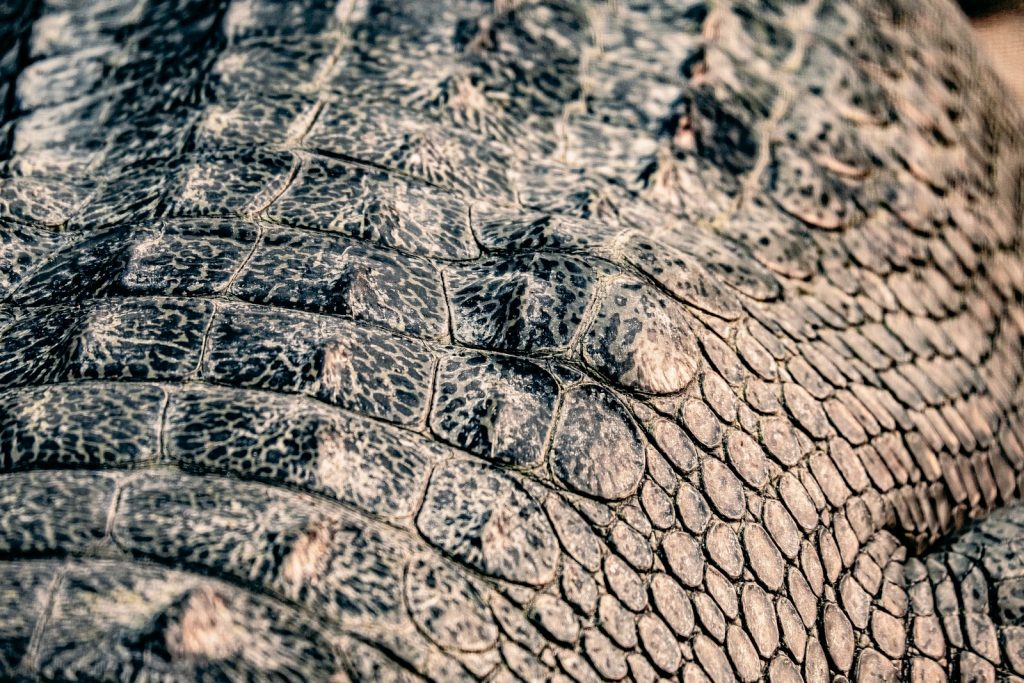
Honest sourcing note: “Crocodile”, “alligator” and “caiman” are different species. The premium crocodilian is saltwater crocodile (Crocodylus porosus); Nile crocodile (C. niloticus) is very high but usually below porosus; American alligator (Alligator mississippiensis) is a separate prized category; caiman is the entry tier. We label species accurately and never sell embossed calf as exotic. Genuine crocodilian is CITES-regulated (typically Appendix II, farmed/ranched, source codes C/F/R); international orders ship with documentation, and you are responsible for your country’s import rules — this is general information, not legal advice. Prices are indicative ranges (mid-2026); final pricing is by quote. Luxury houses are referenced only as neutral examples — we have no affiliation. We are an independent authority and sourcing desk and connect you to vetted makers.
Crocodile leather bag price is not random luxury markup; it is a direct reflection of species, grade, cut, finish, craftsmanship and CITES‑compliant sourcing. If you understand those levers, you can predict how much a crocodile bag should cost and immediately see when something is mislabelled or mispriced.
Quick Answer: How Much Is a Crocodile Bag in 2026?
Below are indicative retail price ranges for well‑made, fully genuine exotic pieces from independent artisans (not mass luxury houses), last verified June 2026. Final quotes always depend on exact spec.
Indicative artisan retail ranges (2026)
- Classic crocodile handbag (porosus / niloticus / alligator): US$3,000–8,000
- Crocodile tote / shopper: US$3,500–9,000
- Crocodile briefcase / document case: US$4,000–12,000
- Crocodile wallet / small leather goods (SLG): US$500–2,500
These ranges assume:
- Top‑tier species (saltwater crocodile Crocodylus porosus, Nile crocodile C. niloticus, or American alligator Alligator mississippiensis)
- High grade skins (Grade I/II), clean belly cuts
- Legitimate CITES‑compliant sourcing with export/import paperwork where required
For context, large heritage luxury houses applying their own brand premium often charge roughly 3–10× these artisan numbers for similar species, cut and grade. A crocodile handbag that an independent maker retails at US$6,000 might appear at a major logo brand above US$30,000, and certain highly hyped colourways at auction can exceed US$200,000.
If you want a precise number for your spec (species, size, finish, hardware), you can plan your trip through our sourcing desk — email or WhatsApp — and we’ll coordinate a detailed, no‑obligation quote with vetted makers.
What Actually Drives Crocodile Leather Cost?
Crocodile leather cost is driven by a stack of technical factors. The marketing story comes last; the material realities come first.
1. Species: porosus > niloticus > alligator (separate category) > caiman
We always label species precisely. “Crocodile” is not one uniform material.
- Saltwater crocodile – Crocodylus porosus
- Often called “porosus”. Farmed mainly in Australia and parts of Southeast Asia. Fine, tight scale pattern with high, even yield from the belly. Generally regarded as the top tier crocodilian for handbags. Typically the highest raw skin prices.
- Nile crocodile – Crocodylus niloticus
- “Niloticus”. Farmed across several African countries and also outside Africa. Slightly larger scale pattern than porosus; still smooth, elegant, and highly suitable for luxury bags. Usually priced just below porosus at the skin level.
- American alligator – Alligator mississippiensis
- Not a “crocodile” taxonomically; it is an alligator. Very soft hand, especially in matte finishes, and widely used by high‑end strap and leather goods makers. Treated as its own prized category. Raw prices roughly in the same band as high‑grade niloticus, depending on farm and finish.
- Caiman – primarily Caiman crocodilus and relatives
- Lower tier exotic. Bony osteoderms (“buttons”) remain in the skin, making it stiffer and less supple. More surface defects, lower yield per skin. Significantly cheaper at the skin level. Often used in entry‑price “croc” products.
Price effect:
- At the same grading and finish, porosus usually commands the highest crocodile leather cost, followed by high‑quality niloticus and American alligator.
- Caiman bags can retail for less than half of an equivalent porosus or niloticus piece — and the difference in flexibility and long‑term wear is obvious in hand.
Any listing that just says “genuine croc” but hides the species while being suspiciously cheap is very often caiman or embossed cowhide.
2. Cut: belly vs hornback vs flanks
The cut determines both aesthetics and how many usable panels a maker gets from each skin.
- Belly cut (sometimes “front cut”): Smooth, flat, relatively even scales. This is what you see on most ultra‑high‑end crocodile handbags. Best yield and easiest to pattern‑match. Highest price per skin and per finished bag.
- Hornback cut (backbone): Raised, rugged, heavily textured osteoderms. Visually dramatic but harder to work and pattern. Often slightly cheaper at the raw skin level; can also reduce yield for large panels.
- Flank / side cuts: Smaller scales, more irregularity. Common in small leather goods (SLGs), trims, or secondary panels. Lower cost and often used to optimise yield.
A full belly‑cut porosus tote uses the most expensive area of the skin, often across multiple skins, so the crocodile handbag price climbs quickly.
3. Grade: defect‑free skin is rare
Tanneries grade crocodilian skins based on scars, bites, holes and growth marks, especially across the central belly.
Typical hierarchy:
- Grade I (or “I / I–II”): Virtually no visible defects on the main cut area. Highest price, limited supply, reserved for hero bags and flagship pieces.
- Grade II: One or two small, workable defects; can usually be hidden in cutting for most bag sizes. Still premium.
- Grade III and below: Multiple defects; fine for small goods, patchwork, or brands that accept more “character”. Much lower price.
Because a single visible scar in the front panel can ruin a US$5,000+ bag, makers pay a significant premium for Grade I and carefully plan patterns to keep any minor defects out of sight.
4. Finish: matte, semi‑gloss, glazed, “Himalaya” and colour
Finish is a major aesthetic and pricing lever.
- Matte: Soft, velvety surface. Especially prized in American alligator and high‑end porosus. Shows the natural grain with minimal reflection. Often preferred by collectors who want discreet luxury.
- Semi‑aniline / semi‑gloss: A thin pigmented layer adds colour while letting the pattern show. Good balance of durability and natural look.
- Glazed: High‑gloss shine achieved by glass‑plating and finishing. Popular in formal handbags and SLGs. Requires more finishing work and careful handling in production.
- “Himalaya” effect: A specific light‑to‑dark gradient, famously used by top heritage houses in a white–grey–taupe palette. Technically, it is a precise dyeing and lightening process, usually on high‑grade niloticus or porosus skins. Expect a surcharge for the combination of grade, colour demands and higher rejection rate in tanning.
Rarer colours and finishes (true deep blues, emeralds, subtle pastels, even, light neutrals) can attract higher crocodile leather cost because of tighter quality tolerances and more rejected skins during finishing.
5. Bag size, pattern layout and skins‑per‑bag
Larger bags do not scale linearly in material cost; they often require a step‑change in skin size or number of skins.
Typical usage (indicative, varies by design):
- Compact handbag (20–25 cm): 1 large or 2 medium crocodile / alligator skins.
- Medium handbag / tote (30–35 cm): 2–3 skins to achieve symmetrical panels and avoid defects.
- Large tote / travel bag (40+ cm): 3–4 skins if the maker wants mirrored patterns and clean bellies.
- Wallet / long zip wallet: 0.3–0.7 of a skin, often from flanks or smaller skins.
Even if your bag “looks small”, the maker may still use two skins to match the left and right side panels and keep the scales harmonious. That directly impacts final crocodile handbag price.
6. Construction, hardware and brand overhead
Material is one part. The rest of the cost stack:
- Bench time: Hand‑cutting, skiving, hand‑stitching, edge treatment and lining work. Exotic skin is unforgiving; mistakes are expensive.
- Hardware: Solid brass, palladium, gold‑plated or precious metal hardware lifts the bill quickly. Custom clasps or locks add tooling cost.
- Brand overhead: Flagship boutiques, global marketing and celebrity campaigns create multiplier effects. This is the “logo” premium that can add 3–10× to an otherwise similar material and construction spec.
Independent artisans and specialist exotic‑only houses usually offer the most direct relationship between material spec and price, because you are not paying for large‑scale brand positioning.
Independent Artisan vs Heritage‑Brand Pricing
We’re independent and have no affiliation with any luxury house. We reference them only to give you realistic context.
Artisan crocodile bag retail (no big‑logo premium)
As above, realistic 2026 ranges for high‑quality, properly sourced crocodile or alligator:
| Item | Typical spec | Indicative price range (2026) |
|---|---|---|
| Crocodile handbag | Porosus / niloticus / alligator, belly cut, Grade I–II, matte or glazed, lined | US$3,000–8,000 |
| Crocodile tote | Porosus / niloticus, 2–3 skins, structured, full lining, premium hardware | US$3,500–9,000 |
| Crocodile briefcase | Porosus / niloticus / alligator, reinforced, multiple compartments | US$4,000–12,000 |
| Crocodile wallet / SLG | Niloticus / alligator / caiman, flank or belly panels, lined | US$500–2,500 |
These figures assume legitimate CITES‑compliant skins and serious bench work, not factory‑line anonymous production.
Heritage‑brand context (no affiliation, for reference only)
Publicly reported figures from major auction houses and press coverage indicate:
- A new, logoed crocodile handbag from a top‑tier heritage house often starts around the mid‑five figures (for example, around the equivalent of £38,000+ for certain porosus or niloticus models at boutique price, depending on market and taxes).
- Special “Himalaya” crocodile pieces from these houses have sold at auction above £230,000, depending on size, condition and year. Those are secondary‑market results, not current boutique prices.
Again, we have no relationship with these brands or auction houses. The point is simple: the same underlying species and finish can cost 3–10× more under a globally recognised logo than from a top independent maker, purely because of brand position and rarity management.
OEM / Wholesale: FOB Crocodile Bag Price Ranges
If you are a boutique, startup brand, or designer planning a line, OEM (Original Equipment Manufacturer) and FOB (Free On Board) pricing matters more than final boutique price.
Indicative OEM / FOB ranges (2026)
Last verified June 2026 with vetted CITES‑compliant partners we track:
- Crocodile / alligator handbags (OEM): around US$800–2,500 per bag FOB, depending on:
- Species (porosus at the top, then niloticus / alligator, then caiman)
- Grade (I/II vs III+)
- Bag size and number of skins
- Lining, hardware, pattern complexity, MOQ
- Crocodile / alligator SLGs (wallets, card holders, key cases): roughly US$80–400 per piece FOB, again species/grade/finish dependent.
These OEM figures are factory‑gate export prices, excluding international freight, import duties, brand markup, and retail overhead. They assume:
- Farmed or ranched skins under CITES Appendix II with proper permits
- Standard order quantities (not a one‑off prototype)
If you need help sourcing:
- We are not a tannery and not a factory.
- We operate a sourcing desk: we curate and connect buyers to vetted, CITES‑compliant makers and exporters, and help you specify materials correctly.
- No one can pay to change what we publish; if you proceed with our partner they may pay us a referral fee at no extra cost to you.
For an OEM or wholesale project (bags or watch straps), you can plan your trip with us via email or WhatsApp and we’ll help you frame MOQs, lead times, and realistic FOB targets.
Why Are Some “Croc Bags” So Cheap?
Seeing a “crocodile bag” for a few hundred dollars online raises two red flags: species ambiguity and surface deception.
1. Embossed calfskin or PU sold as “croc style”
Most sub‑US$300 “croc look” handbags are:
- Embossed cowhide: A patterned plate stamps a crocodile‑like pattern into bovine leather. You can usually see repeating, too‑regular tiles. The back side or edges look and feel like regular cowhide.
- PU / PVC synthetics: Plastic sheet with a crocodile pattern and gloss. Uniform, plasticky, sometimes chemical smell, edges look melted rather than fibrous.
These can be decent fashion items, but they are not exotic leather. We never call them crocodile and we advise you to check descriptions carefully. “Croc pattern”, “croc style”, “croc‑embossed” = not exotic.
2. Genuine but low‑tier caiman or mixed panels
You may find genuine exotic bags at relatively low prices by:
- Using caiman rather than porosus / niloticus / alligator.
- Combining small offcuts or patchwork panels instead of full, mirrored belly panels.
- Using lower‑grade skins with visible scars or uneven pattern across the main faces.
If the listing just says “genuine crocodile” and you see:
- Very stiff handles that show cracking at the bony “buttons”
- Uneven, almost lumpy feel rather than supple drape
…it is often caiman. That is valid, but it should be labelled caiman and priced accordingly, usually well below top crocodile or alligator.
3. Paperwork shortcuts (or none)
Fully legal international trade in crocodilian leather (skins and finished bags) is regulated under CITES (the Convention on International Trade in Endangered Species).
Most commercially traded crocodilians (porosus, niloticus, caiman, American alligator) are:
- Listed under CITES Appendix II for farmed / ranched populations.
- Exported with CITES permits noting source codes such as:
- C – bred in captivity
- F – born in captivity (but not under a defined breeding program)
- R – ranched (taken as eggs or juveniles from the wild and raised on farms)
If something is suspiciously cheap and offered for international shipment with no mention of CITES permits, treat that as both a legal and ethical warning sign.
We do not provide legal advice; buyers and brands must verify requirements with their own country’s CITES Management Authority before importing exotic leather. But in broad strokes: proper paperwork has a cost, and that cost shows up in the crocodile leather bag price.
How Many Skins Go Into a Bag (and Why That Matters)
Crocodilian skins are not like cow sides. The usable area and symmetry constraints matter.
Skin size vs bag size
Skin sizes are typically measured from the widest part of the belly (belly width). For premium belly‑cut bags:
- A 30–32 cm handbag might require a belly width of 40–45 cm to get a clean, defect‑free central panel with enough margin.
- For larger totes or briefcases, tanneries and makers often want 50 cm+ bellies, which are rarer and priced higher per cm.
Matching panels
Collectors notice if:
- The front and back scales differ obviously in size.
- Left and right sides of the bag show different pattern rhythm.
To avoid that, an expert maker will:
- Use two or more matched skins from the same batch.
- Mirror‑cut panels so the pattern flows symmetrically.
That is why a “small” but perfectly mirrored porosus bag can be materially more expensive than a larger, more randomly cut caiman bag. Matching constraints drive up skins‑per‑bag, and therefore cost.
Making an Exotic Bag Last: Care and Use
Because crocodile and alligator are high‑value materials, good care is effectively part of the price equation — it’s how you protect your spend.
Porosus / niloticus / alligator care basics
These top‑tier skins are relatively durable if:
- You avoid prolonged saturation. Light rain is usually fine; do not soak the bag or dry it with heat.
- You store it in a breathable dust bag, away from direct sunlight and strong heat sources.
- You support the shape with acid‑free stuffing when not in use to prevent creasing and collapse.
- You clean gently with a soft, dry cloth; for anything more, use care products specifically marked for exotic leathers and test in a hidden area.
Matte finishes are slightly more forgiving for scratches; glazed finishes demand more careful handling to avoid dulling or micro‑scratches.
Caiman care differences
Because of the bony plates:
- Caiman is stiffer and more fracture‑prone at flex points.
- Handles and straps made from caiman should not be overloaded or twisted repeatedly.
Used gently and stored correctly, even caiman bags can last, but they are inherently less supple than high‑grade porosus/niloticus/alligator and their long‑term patina is different.
Professional maintenance
For high‑value pieces:
- Use specialist exotic‑leather workshops for re‑stitching, edge renewal or recolouring.
- Avoid generic cobblers who may not understand how thinly skived exotic panels are and can damage them with heavy machines or incorrect adhesives.
If you need recommendations for reputable exotic‑leather repair specialists, you can plan your trip with us and we’ll share vetted contacts where available in your region.
How We Work: Independent Authority + Sourcing Desk
Crocodile Leather Bags (crocodileleatherbags.com) exists for one reason: to make the exotic‑leather world legible.
We:
- Explain species, grading, cuts and finishes in practical, craft‑level detail.
- Distinguish clearly between saltwater crocodile (porosus), Nile crocodile (niloticus), American alligator, and caiman — never blending them under vague “genuine croc” wording.
- Reference CITES Appendix II status and typical source codes (C, F, R) so buyers understand the compliance layer. This is not legal advice; you must still check with your national authority.
- Run an independent sourcing desk that:
- Curates and connects serious buyers (retail or wholesale) with vetted, CITES‑compliant makers.
- Helps you specify what you actually want — species, cut, finish, grade, lining — in the same language tanneries and workshops use.
- Can assist with watch‑strap sourcing via our sister authority site alligatorwatchstrap.com for exotic‑leather straps.
We are not a tannery and not a mass reseller. No one can pay to change what we publish; if you proceed with a partner we introduce, they may pay us a referral fee at no extra cost to you.
If you’re planning a bespoke bag, a small SLG run, or a full private‑label line, reach out via plan your trip — email or WhatsApp — and we’ll walk you through realistic crocodile leather bag price ranges for your exact spec.
FAQ: Crocodile Leather Bag Price (2026)
How much is a crocodile bag in 2026?
A well‑made genuine crocodile or alligator handbag from an independent artisan typically runs about US$3,000–8,000 in 2026, depending on species (porosus, niloticus, alligator, caiman), size, grade, cut and finish. Totes are usually US$3,500–9,000, briefcases US$4,000–12,000, and wallets / SLGs US$500–2,500. Big‑logo heritage brands often charge 3–10× those figures for similar material specs because of brand and scarcity premiums.
Why is there such a wide price range for crocodile handbags?
The spread reflects material and craft realities: porosus vs niloticus vs alligator vs caiman, Grade I vs III skins, belly vs flank cuts, bag size (and how many skins are needed), finish (matte vs glazed vs complex gradients) and the level of handwork. On top of that, brand overhead and distribution layers add their own markup, which is why two bags that both say “crocodile” can sit thousands of dollars apart.
Why are some “croc” bags so cheap?
Most very cheap “croc” bags are either embossed cowhide or synthetic with a crocodile pattern — not exotic leather at all. Among genuine exotics, lower prices usually mean caiman rather than porosus / niloticus / alligator, lower skin grades, smaller or patched panels, or shortcuts on lining and hardware. Sometimes low pricing coincides with weak or absent CITES paperwork for international shipments, which is a legal and ethical risk.
What is the brand premium on crocodile bags?
For comparable species, grade and finish, major heritage houses often price crocodile handbags roughly 3–10× higher than independent exotic specialists. That premium pays for global boutiques, marketing, and their controlled‑scarcity strategy, not for fundamentally different crocodile leather. At the very top, limited colourways and auction dynamics can push prices into the six‑figure range, far beyond underlying material cost.
Is American alligator the same as crocodile in terms of price and quality?
Taxonomically, no — American alligator is Alligator mississippiensis, not a crocodile. In practice, high‑grade alligator sits in the same upper tier as porosus and niloticus in both quality and price, with a particularly soft hand in matte finishes. Many top makers treat it as its own premium category. It should be labelled “alligator”, not “crocodile”, and priced accordingly, usually similar to high‑grade niloticus depending on finish and supply.