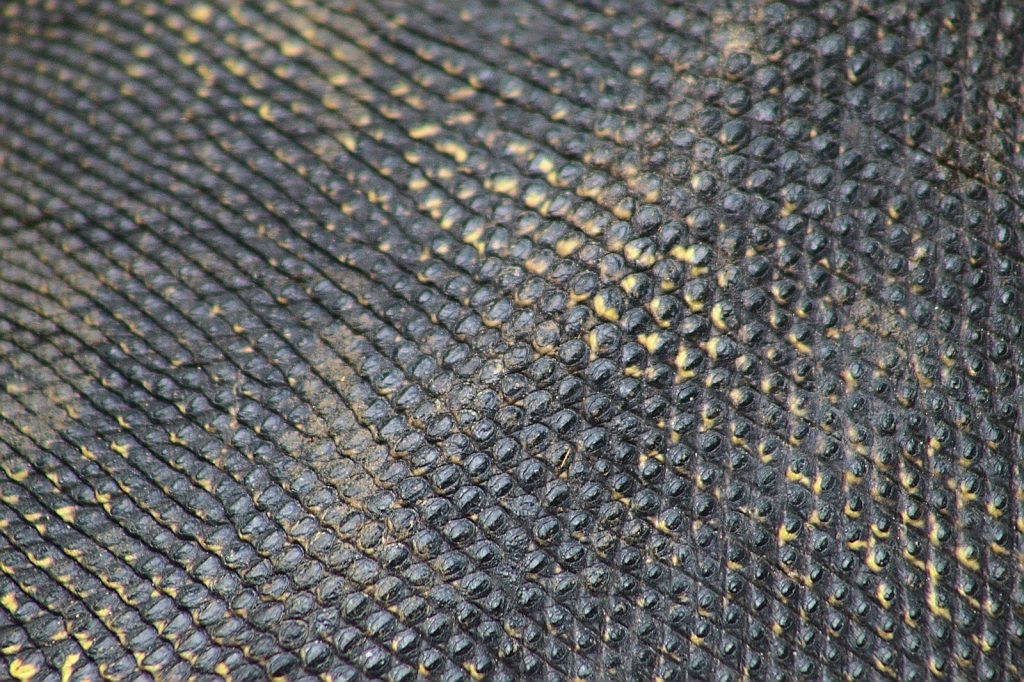
An exotic leather bag supplier is a company or sourcing desk that can specify species, grades, CITES paperwork and factory capabilities for crocodile, alligator and other reptile leathers, then coordinate production and export legally. At Crocodile Leather Bags, our role is exactly that: an independent sourcing desk and reference site, not a tannery or fashion house, helping you brief, price and place a compliant project with vetted makers.
Our focus is the serious buyer: private clients, brands and retailers who want correct species labelling, clear technical specs and realistic pricing. For a custom crocodile bag quote, a crocodile bag RFQ or a wholesale crocodile bag contact, you can use the enquiry form at the top of this page, WhatsApp or email to reach our sourcing desk.
—
## How to Contact Us for Bespoke & Wholesale Exotic-Leather Bags
We keep communication simple and documented. For all enquiries, please:
– Use the enquiry form at the top of this page, or
– Send us a detailed message by:
– Email: (use the contact link and address provided in the site header)
– WhatsApp: for faster specification clarifications and photo sharing
For complex or wholesale/OEM/private-label projects, we recommend starting with the form and then moving to WhatsApp once we have a written brief on file.
Typical enquiries we handle:
– One-off bespoke crocodile or alligator bag for a collector or executive
– Capsule runs (10–50 pcs) in specific Crocodylus porosus colours and finishes
– OEM/private-label for boutiques wanting logo-debossed exotic-leather bags
– Multi-country wholesale programs that must clear CITES in several markets
– Sourcing specific cuts (belly vs hornback), grades and tanning finishes
We curate and coordinate; our vetted partners design, cut and sew. No one can pay to change what we publish; if you proceed with our partner they may pay us a referral fee at no extra cost to you.
—
## What to Include in Your Custom Crocodile Bag Quote Request
The more precise your brief, the faster we can move from “idea” to a realistic custom crocodile bag quote. You do not need all of this decided on day one, but each point helps.
Use this checklist in the enquiry form at the top of this page or send it via WhatsApp/email:
### 1. Intended Use and Reference
– Is this for personal use, gift, or brand/retail?
– Send reference photos or links to publicly known designs (e.g. “Hermès Kelly 25 style top handle, no affiliation”) so we understand volume, structure and hardware style.
– Indicate soft vs structured and if you prefer visible scales or more subtle texture.
### 2. Species (Honest, Precise Labelling)
We do not blur or “upgrade” species. We will write exactly what the piece is on quotes and invoices.
Key categories:
– Saltwater crocodile – Crocodylus porosus (“porosus”)
– Farmed and ranched in Indonesia and other producing countries.
– Considered top-tier luxury crocodile by most collectors.
– Very fine, regular belly scale pattern; high flexibility at equivalent thickness.
– Most high-end “crocodile” bags from major houses using belly cuts are porosus.
– Nile crocodile – Crocodylus niloticus (“niloticus”)
– Farmed mostly in Africa and some other regions.
– Slightly larger, more variable belly scales vs porosus.
– Still very high-end, often a more accessible price than porosus at similar sizes.
– American alligator – Alligator mississippiensis
– Separate category from crocodiles, wild and farmed in the United States.
– Often favored in matte finishes with a soft, luxurious hand.
– Collectors value it on its own merits; we will not call it “crocodile”.
– Caiman – chiefly Caiman crocodilus and related species
– More prominent osteoderms (bony plates), stiffer, can crack if over-bent.
– Lower tier in price and handle compared with porosus, niloticus and alligator.
– Suitable for certain structured or small items if expectations are clear.
We never call embossed or printed calf “exotic” or “crocodile”. If a project uses embossed bovine, it will be labelled as such in writing.
Tell us:
– Your preferred species (e.g. “porosus belly only” or “American alligator matte”).
– Your acceptable alternatives (“if porosus is not feasible, consider niloticus belly”).
### 3. Cut, Panels and Skins-per-Bag
For serious buyers and brands, this is non-negotiable detail.
Most structured handbags (25–35 cm class) in belly cut will require:
– Porosus or niloticus belly:
– Typically 1–2 prime belly skins per bag for a 25 cm class top-handle/shoulder bag.
– Larger 30–35 cm bags may need 2–3 skins, depending on pattern matching and defect avoidance.
– Hornback styles:
– Often 2+ skins per bag due to pattern layout and usable area.
– Caiman:
– Usable area per skin is smaller in practice due to bony plates and grading; expect 2–3 skins even for medium sizes.
For RFQs, please state:
– Bag dimensions or reference.
– If you require “full single-skin front/back” appearance (higher skin consumption, higher price).
– Acceptance of joint lines on gussets or undersides where they will not be visually dominant.
### 4. Finish, Colour and Hardware
Common exotic finishes and their implications:
– Classic gloss / high-shine
– Often used on porosus and niloticus belly for formal bags.
– Shows grain and minor defects more clearly; demands higher grade skins.
– Matte
– Favoured for alligator and many modern porosus/niloticus bags.
– More forgiving in day-to-day use, less visually loud.
– Semi-matte / satin
– Compromise between the two; suitable for many wholesale lines.
Colour:
– State if you want core neutrals (black, dark brown, navy, burgundy) or seasonal colours.
– For brands: indicate if you need recurring dye lots for multi-year continuity.
Hardware:
– Finish (gold-tone, palladium/silver-tone, ruthenium, etc.).
– Branding:
– No branding (blank hardware).
– Your logo deboss/engrave (for OEM/private-label — we will request vector files).
### 5. Quantity and Target Budget
For a crocodile bag RFQ or wholesale crocodile bag contact, please include:
– Quantity per style/colour and total quantity.
– Your target ex-works price range per unit, if you have one.
– Your target retail price band, if relevant (helps align spec vs market reality).
Indicative retail price ranges (last verified June 2026, final by quote only, depending on spec, grade, size, maker and market):
– Porosus belly bespoke bag (25–30 cm):
– Approx. USD 4,000–10,000+ retail equivalent.
– Niloticus belly bespoke bag (similar size):
– Approx. USD 3,000–8,000+.
– American alligator matte (25–30 cm):
– Approx. USD 3,500–9,000+.
– Caiman structured bag:
– Approx. USD 800–2,500+.
Wholesale/OEM ex-works pricing will be materially lower per unit, but depends on volume, grade, hardware and construction complexity. Serious RFQs should be based on ex-works or FOB expectations, not purely on retail analogies.
—
## CITES, Species Legality and Export: What You Must Know
Our role is to keep the legal and traceability side clear. This is not legal advice. Every buyer and brand must verify import requirements with their own CITES Management Authority and customs broker.
### CITES Status of Key Species
Most commercial crocodilian leathers fall under CITES Appendix II, meaning international trade is controlled and requires permits:
– Crocodylus porosus (porosus) – Appendix II in most producer countries, with some wild populations under Appendix I (stricter). Farmed/ranched Indonesian porosus we work with is traded under Appendix II with proper permits.
– Crocodylus niloticus (niloticus) – Appendix II for most ranching and farming operations under national quotas.
– Alligator mississippiensis (American alligator) – Appendix II with robust state and federal management in the USA; widely traded under sustainable-use programs.
– Caiman species – Many are Appendix II; some are not listed but still subject to national controls.
We work only with legally farmed, ranched or otherwise CITES-compliant skins, indicated by source codes on permits, such as:
– C – Bred in captivity (meets CITES definition of “bred in captivity”).
– F – Born in captivity (second-generation, not full C definition).
– R – Ranched specimens (collected as eggs or juveniles and raised on farms).
– W – Wild-taken (we avoid for fashion applications unless there is a specific, justified case and robust documentation).
Your final bag export will typically move with:
– A CITES re-export permit from the country of export if the skins were already imported.
– Or a CITES export permit from the country that produced and tanned the skins.
You are responsible for ensuring that import is allowed into your jurisdiction and that any pre-Convention, personal effects or commercial shipment rules are followed.
—
## Indonesia’s Farmed Crocodylus porosus and Other Supply Sources
Indonesia is one of the key producers of farmed and ranched Crocodylus porosus skins, operating under national regulations and CITES quotas. We maintain a sourcing focus on:
– Documented farmed/ranched porosus with traceable farm and tannery documentation.
– Skins that are legally tanned in facilities compliant with local environmental and labour laws.
– Tanners that accurately declare grades and defects; we cross-check yields against claimed grades for specific projects.
We do not publish tannery or farm names without explicit permission and documentation. On request, at RFQ stage, we can:
– Indicate the country of origin of skins and tanning.
– Share anonymised grading sheets so you understand defect categories (belly pinholes, crown scars, flank marks, etc.) before committing to a grade/price band.
We also source:
– Niloticus from established African and third-country tanneries.
– American alligator via US-tanned stocks with appropriate documentation.
– Caiman from Latin American producers where it is legal and traceable.
—
## Typical MOQs, Lead Times and Project Flow
### Minimum Order Quantities (MOQs)
These are indicative only and vary by maker and season. Final figures will be in your quote.
– Bespoke one-off:
– MOQ: 1 piece per style/spec.
– Species: usually porosus, niloticus or alligator; caiman on request.
– Small-batch OEM/private-label:
– Typical MOQ: 5–10 pieces per style/colour for high-end crocodile/alligator.
– Some makers prefer 10–20 pieces per style/colour for more efficient cutting and hardware orders.
– Larger wholesale programs:
– MOQs of 50–100+ pieces, often spread across a few colourways and sizes, are common for competitive pricing.
If your volume is below these ranges but you are flexible on spec (e.g. “any neutral colour, matte porosus belly, 5 pcs”), mention this clearly; we can sometimes match low-volume buyers to leftover stock or surplus skins.
### Lead Times
Indicative production + documentation timelines (excluding transit; last verified June 2026):
– Bespoke single bag:
– Pattern finalisation and approval: 1–2 weeks (assuming clear reference).
– Cutting, sewing, finishing: 4–8 weeks.
– CITES export permitting: 2–6 weeks depending on authority and season.
– Small-batch OEM (5–50 pcs):
– Prototype: 3–6 weeks.
– Production: 6–12 weeks after prototype sign-off and deposit.
– CITES and export: 2–8 weeks.
Total project times commonly run 3–6 months door-to-door for new buyers, depending on how quickly decisions and approvals are made. Large or multi-style projects can take longer.
For early-stage planning, use the enquiry form or WhatsApp via this page so we can help you plan your trip from concept to deliverable schedule with realistic buffers around CITES.
—
## Grades, Quality Control and Honest Trade-Offs
High-grade crocodilian leather is scarce and expensive. For each RFQ we will ask you to prioritise:
– Grade vs price
– Visual perfection vs natural character
– Yield vs waste
### How Crocodilian Skins Are Commonly Graded
Grades are typically defined by the number and severity of defects in the prime area, particularly the belly:
– Grade I / I–II:
– Minimal or no visible defects in the main belly area once cut.
– Used for top-tier luxury bags and visible panels.
– Grade II / II–III:
– Small scars, healed marks, slight irregularities that may be avoidable with clever pattern placement.
– Suitable for high-quality but slightly more affordable bags.
– Grade III and below:
– More noticeable defects; good for smaller leather goods, gussets, under-panels, or price-focused lines.
For each project, we will specify:
– Proposed grade range (e.g. “Grade I–II belly, Grade II–III for gussets”).
– Expected defect management strategy (hidden areas, linings, reinforcement).
We will never quote you a “Grade I” price and then quietly substitute lower-grade skins.
—
## Quick Species Comparison for Bag Projects
| Category | C. porosus (porosus) | C. niloticus (niloticus) | A. mississippiensis (alligator) | Caiman spp. |
|---|---|---|---|---|
| CITES | Appendix II (most farmed/ranched) | Appendix II (ranching/farms) | Appendix II | Often Appendix II or national controls |
| Typical Tier | Top-tier crocodile | Very high; slightly below porosus | Separate high-end category | Entry to mid-tier exotic |
| Feel | Supple, fine-scaled belly | Slightly larger scales, still supple | Soft, often matte, luxurious | Stiffer, more rigid plates |
| Best Uses | Top-handle, luxury shoulder bags | Luxury bags and SLGs | High-end matte bags, SLGs | Structured bags, small items |
| Price Band* | Highest of the four | Below porosus at similar grade | Comparable to high crocodile | Lowest of the four |
*Indicative, relative only. Final pricing by project quote, last verified June 2026.
—
## Care, After-Sales and Repairs
We do not operate a repair workshop, but we can advise on care and help you locate appropriate services.
Basic care guidance for crocodile, alligator and caiman bags:
– Avoid prolonged direct sunlight or high heat (car dashboards, heaters).
– Keep away from solvents, perfumes and hand sanitisers; they can dry and stain finishes.
– Use a breathable dust bag; avoid plastic bags for storage.
– Store with light filling to maintain shape, especially for soft constructions.
– Use only specialised exotic-leather conditioners and test on a hidden area first; some finishes should not be oiled or over-conditioned.
On request, we can:
– Suggest regional repair specialists who are used to crocodilian leather.
– Liaise with the original maker regarding replacement parts (handles, hardware) if your bag was produced through our sourcing desk.
For watch straps in exotic leather (alligator, crocodile, lizard), see our sister reference site alligatorwatchstrap.com, which focuses on strap-specific grading, fit and care.
—
## Ready to Start? How to Engage Our Sourcing Desk
1. Gather your references and requirements.
Photos, dimensions, species preferences, target quantity and target price band.
2. Use the enquiry form at the top of this page.
Paste your checklist and attach or link to references. Mark if your enquiry is:
– Bespoke (1–3 pcs)
– OEM/private-label
– Wholesale/trade
3. Move to WhatsApp for fine-tuning.
Once your RFQ is logged, we’ll typically suggest a WhatsApp chat for faster clarifications, live photo sharing of possible materials, and timing checks.
4. Receive an indicative range, then a formal quote.
Initial ranges (species/grade/lead-time options) are followed by a formal quote once you lock in spec and quantities. All pricing and dates remain indicative until confirmed in writing by the producing partner.
Use this page’s contact options to plan your trip from idea to legally exportable, CITES-documented exotic-leather bag with full species disclosure.
—
## FAQs
How do I get a quote for a custom crocodile bag?
Use the enquiry form at the top of this page and provide reference photos, dimensions, preferred species, finish, colour, quantity and your target budget range. We will respond with clarification questions if needed, then arrange a custom crocodile bag quote from a vetted maker.
What are your minimum order quantities (MOQs) for wholesale crocodile bags?
Bespoke one-off projects can be produced as a single piece. For OEM and wholesale, indicative MOQs range from about 5–10 pieces per style/colour at the high end, with 10–20 pieces more typical for efficient production. Larger programs may start at 50–100+ units. Final MOQs depend on species, spec and maker, and are confirmed in your crocodile bag RFQ response.
Do you ship worldwide, and are CITES permits included?
Our vetted partners export to many countries, but CITES and import rules vary. In most cases, the maker arranges CITES export or re-export permits; you are responsible for confirming that import is legal and for handling any local licensing, duties and brokerage. We always label species and sources accurately so you can check with your own CITES Management Authority before committing.
How long does production take for a bespoke or OEM crocodile bag order?
Bespoke single bags typically require 6–10 weeks for production plus 2–6 weeks for CITES paperwork, assuming all decisions are made promptly. OEM runs of 5–50 pieces often take 3–6 months from brief to shipment. Exact lead times are given as ranges in your quote and depend on complexity, factory load and permitting timelines.
Can you copy designs from brands like Hermès, Louis Vuitton or Gucci?
No. We may reference well-known models only as public examples of size or structure, with no affiliation and no intent to replicate protected designs. Your project must respect intellectual property and trademark law. Our role is to help you specify species, materials and construction for legitimate, original or generic designs, then place that work with compliant makers.