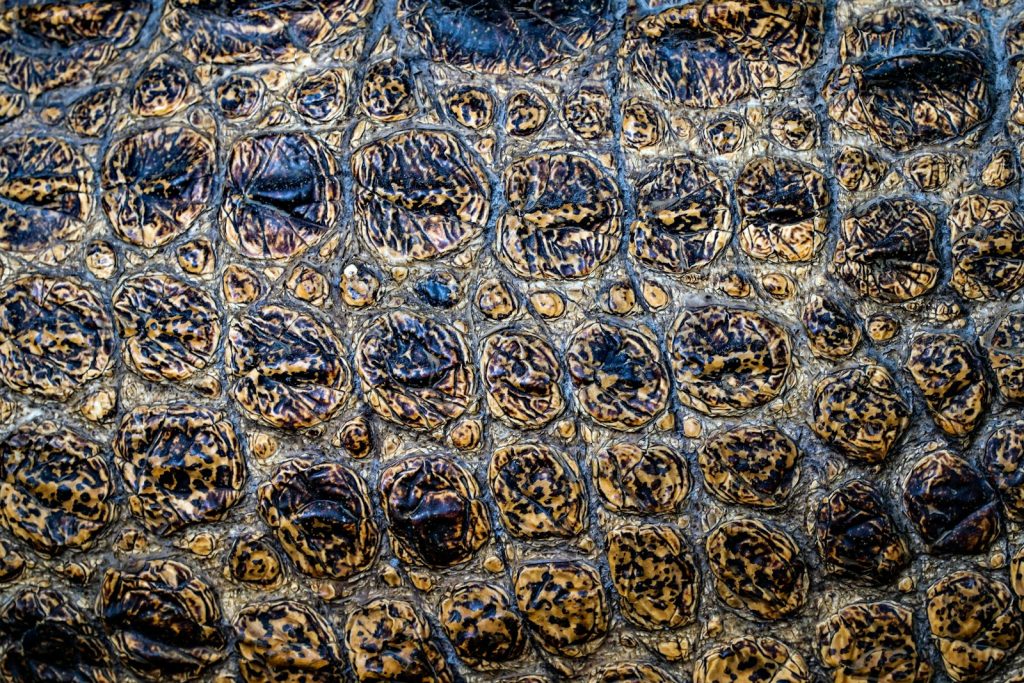
Honest sourcing note: “Crocodile”, “alligator” and “caiman” are different species. The premium crocodilian is saltwater crocodile (Crocodylus porosus); Nile crocodile (C. niloticus) is very high but usually below porosus; American alligator (Alligator mississippiensis) is a separate prized category; caiman is the entry tier. We label species accurately and never sell embossed calf as exotic. Genuine crocodilian is CITES-regulated (typically Appendix II, farmed/ranched, source codes C/F/R); international orders ship with documentation, and you are responsible for your country’s import rules — this is general information, not legal advice. Prices are indicative ranges (mid-2026); final pricing is by quote. Luxury houses are referenced only as neutral examples — we have no affiliation. We are an independent authority and sourcing desk and connect you to vetted makers.
A crocodile bag manufacturer is the specialist factory that turns tanned exotic skins into finished bags under your brand. On this page, we explain how to choose a crocodile bag manufacturer, what documents and source codes to demand, and how our sourcing desk connects brands with vetted, CITES‑compliant makers.
At Crocodile Leather Bags, we are an independent authority and sourcing editor, not a tannery and not a mass‑production factory. We sit on the legal and sourcing side: species accuracy, CITES paperwork, Indonesian farmed crocodile supply, and matching you with an appropriate crocodile bag maker or exotic leather bag manufacturer for your project.
—
1. What “crocodile” really means: species, cuts and finishes
If you are specifying, buying, or marketing crocodile bags, precision matters. “Genuine crocodile” is not enough.
1.1 Core species used in luxury bags
For high‑end handbags and small leather goods, four reptile categories appear most often:
- Saltwater crocodile (Crocodylus porosus)
- Market shorthand: “porosus”. Premium crocodile skin worldwide. Fine, small, regular belly scales; minimal osteoderms in the belly. Used in top‑tier bags by major luxury houses (e.g. Hermès, Louis Vuitton, Gucci — cited here only as public examples, with no affiliation).
- Nile crocodile (Crocodylus niloticus)
- Often just called “Nile”. Larger, slightly more irregular scale pattern than porosus. Very high quality; usually priced below porosus of equivalent grade.
- American alligator (Alligator mississippiensis)
- Separate category, not “crocodile”. Soft, supple, often used in matte finishes for bags, watch straps, and small leather goods. Typically farmed and tanned in the US and Europe.
- Caiman (mostly Caiman crocodilus fuscus)
- Lower‑tier reptile leather for bags. Prominent bony plates (osteoderms) that make the leather stiffer, less supple, and generally less expensive. Often used for entry‑level “exotic” products. Should never be passed off as porosus or alligator.
We will never describe caiman or embossed calf as “premium crocodile”. Any factory we suggest must label species correctly in pro‑formas, invoices, and — where required — on CITES permits.
1.2 Common cuts for crocodile bags
The cut (which part of the animal, and how it is sliced) determines the pattern on the bag:
- Front‑cut belly: Belly scales centered, tail runs down the bag. Classic for structured handbags.
- Back‑cut: Flank and side scales dominate; gives a more irregular, “wild” look. Sometimes used to maximize yield on smaller skins.
- Hornback: Uses the heavily ridged back with dorsal scutes. Highly textural; not typically used for fine, rigid handbags but for certain fashion pieces.
- Tail and flank panels: Often used for gussets, straps, or small goods to optimize skin yield.
A competent crocodile bag maker can show you CADs or hand sketches that map panel placement to specific areas of the skin, so you know exactly how the belly, flank, and tail will appear on your finished bag.
1.3 Finishes and grading
Typical finishes for crocodile and alligator bags:
- Gloss (polished): Achieved by glazing with agate rollers or similar. High shine; shows every scale and any defect.
- Matte: Soft, velvety look. Popular for alligator; also used on porosus and Nile.
- “Semi‑matte” / satin: Between pure matte and high gloss.
- Special finishes: Pearlised, metallic, hand‑dyed patina, nubuck/sueded, and others — these require more specialised tanneries.
Grading is usually done at the tannery level, before the skins reach the factory. There is no single global grading code, but broadly:
- Grade I / 1: Virtually no visible defects in the main cutting area.
- Grade II / 2: Minor defects; careful pattern placement can avoid them.
- Grade III / 3 and below: Visible defects or scars; often used for smaller goods or lower‑priced lines.
An honest manufacturer will state both species and grade range in their quotation.
—
2. CITES, legality and source codes: what a serious buyer must ask for
All genuine crocodile and alligator leathers in international trade fall under CITES (the Convention on International Trade in Endangered Species of Wild Fauna and Flora). This has real implications for brands, wholesalers, and designers.
We are not a law firm and this is not legal advice. Always check specifics with your national CITES Management Authority. That said, there are some non‑negotiables every serious buyer should demand.
2.1 CITES appendices relevant to bags
For bag manufacturing, the main CITES listings are:
- Crocodylus porosus: Appendix II (except certain wild populations). Most international luxury trade uses farmed Appendix II stock.
- Crocodylus niloticus: Mostly Appendix II (some national populations may be Appendix I; those are tightly controlled).
- Alligator mississippiensis: Appendix II.
- Caiman species: Typically Appendix II.
Appendix II allows controlled commercial trade with correct permits. Appendix I (normally not used for fashion bags) is far stricter and often prohibits commercial movement except under specific exemptions.
2.2 Key CITES source codes for farmed and ranched skins
On export permits, each shipment includes a source code. For crocodilian leather used in bags, you will most often see:
- C = Bred in captivity for commercial purposes (in operation registered where relevant).
- F = Born in captivity (not necessarily in a commercial breeding operation).
- R = Ranched (eggs or hatchlings taken from the wild under a management program, raised in captivity).
From a compliance and brand‑story point of view, you should be able to ask: “For these skins, what is the CITES source code?” and receive a precise answer backed by actual documentation from the tannery or exporter.
2.3 Essential documents for crocodile bag production
Depending on your role, you may or may not see every document yourself, but a serious crocodile handbag factory indonesia‑based or elsewhere should be able to provide evidence that:
- Raw or crust/tanned skins were legally exported from the origin country with CITES export permits.
- If re‑exported (for example, tanned in one country then shipped to another for bag production), there are valid CITES re‑export permits.
- If finished bags cross borders as wildlife products, your importer can obtain or has obtained the required import documents (permit, import notification, or exemption confirmation, depending on jurisdiction).
At a minimum, expect:
- Copy or scan of relevant CITES permits (with species, quantity, source code, and exporter/importer matching invoices).
- Commercial invoices that clearly specify scientific name (e.g. Crocodylus porosus) and number/area of skins or finished items.
- Traceable link (lot/batch numbers) between skins purchased and the production of your order.
Any manufacturer reluctant to discuss species names or permits, or who insists on calling everything “exotic leather” without detail, should raise red flags.
—
3. Indonesia’s crocodile handbag factories: potential and variability
Indonesia is an important exporter of farmed Crocodylus porosus as well as other crocodilians. It is also home to a number of workshops and factories that specialise in exotic‑leather bags for export markets.
However, there is no single uniform standard for tannery or factory quality across the country. The variance is significant:
- Some facilities work regularly with top‑grade porosus and export under their clients’ labels to Europe, Japan, the US, and the Middle East.
- Others mainly process lower‑grade crocodile or caiman for budget products and tourist markets.
- Skill levels in skiving, edge finishing, lining work, frame construction, and hardware setting vary widely.
As a buyer, this means two things:
- You cannot assume that any “crocodile handbag factory indonesia” will meet the expectations of a European luxury‑brand customer.
- You must verify both technical capability (can they build the bag you have in mind?) and compliance (are the skins and shipments properly documented under CITES and local law?).
This gap between potential and variability is exactly where our sourcing and CITES‑compliance desk operates.
—
4. What Crocodile Leather Bags actually does (and does not do)
Clarity of role is critical. We are not a tannery, and we are not a mass‑market bag factory.
4.1 Our role: independent sourcing desk and editor
We operate as:
- Research and editorial hub: Explaining species, cuts, grading, CITES basics, and realistic pricing bands.
- Vetted‑maker sourcing desk: Introducing brands, designers, and wholesalers to suitable crocodile bag manufacturers and exotic leather bag manufacturers that meet agreed criteria.
- Coordination and documentation sanity‑check: Helping you understand what documents to ask for and how to read them, and facilitating communication between you and the maker.
If you proceed with a partner we introduce, they may pay us a referral fee at no extra cost to you. No one can pay to change what we publish.
4.2 What we do not claim
To maintain credibility:
- We do not claim a relationship with any luxury house or brand (e.g. Hermès, Louis Vuitton, Gucci). They are mentioned only as public benchmarks.
- We do not list or promote any tannery or factory as “our own” unless we have explicit, verifiable documentation of that operational relationship.
- We do not rebrand caiman, printed calf, or PU as “crocodile”. If a supplier tries to, we will not introduce them to clients.
Our role is to make exotic‑leather sourcing more legible, honest, and predictable for professional buyers.
—
5. How to choose a crocodile bag manufacturer: a step‑by‑step filter
Choosing the right crocodile bag maker for your brand is a filtering exercise. You want to move from a long list of “possible” factories to one or two you trust with your name.
5.1 Step 1: Define your product and species clearly
Before asking for quotes, specify:
- Product type: Tote, top‑handle, mini, clutch, SLG set, mixed‑material bag (e.g. crocodile flap + calf body), etc.
- Target retail bracket: Helps determine suitable species (porosus/alligator vs Nile vs caiman) and grade.
- Species, cut, finish: For example, “porosus front‑cut, high‑gloss” or “alligator matte, back‑cut”.
- Intended markets: EU, US, Middle East, East Asia — this affects CITES and import requirements.
Factories respond far better to specific, technically informed briefs.
5.2 Step 2: Assess technical capabilities
Ask for:
- Workshop photos and sample images of structurally similar bags (not just wallets or belts).
- Information on equipment: skiving machines, edge‑painting systems, stitching machines appropriate for exotic leather.
- Details of pattern‑making and prototyping: In‑house or outsourced? CAD or manual only?
If possible, commission a single prototype before committing to full production. This is where you see real edge quality, lining work, and hardware fitting.
5.3 Step 3: Vet legal and CITES compliance
Key questions and checks:
- Can they provide sample CITES documents (with sensitive data redacted) from previous exports?
- Do their invoices list scientific names and source codes or only generic labels?
- Who procures the skins — you or the factory? If the factory, from which country and under which permits?
You should also check with your own CITES Management Authority what will be needed to import finished bags into your country. For example, some markets are moving toward stricter controls on personal luggage imports; brands need to be prepared.
5.4 Step 4: Commercial terms — price ranges, MOQs, lead times
Without inventing “standard” prices, we can outline the structure of typical commercial terms:
- Minimum order quantities (MOQs):
- Full‑exotic structured handbags: often 10–30 pieces per model/colour for established factories.
- Mixed‑material bags or small leather goods: MOQs can be higher (50–100+) due to lining, hardware, and labour amortisation.
- Lead times (indicative, last verified June 2026):
- Prototype: ~4–8 weeks after finalised specs and payment.
- Production run: ~8–16 weeks after prototype sign‑off, deposit, and skin availability.
- Pricing bands (very broad, indicative structure, last verified June 2026):
- Porosus/alligator full‑exotic bags: high to very high wholesale brackets per piece, depending on grade, size, hardware, and lining.
- Nile crocodile: typically below porosus, sometimes overlapping lower porosus ranges.
- Caiman: significantly lower, reflecting material cost and stiffness.
Factories that quote far below global market norms on “porosus” or “alligator” should be scrutinised carefully for mislabelled species or grades.
For an indicative band tailored to your design and target markets, you can plan your trip through the sourcing process with us via email or WhatsApp; we can help translate your sketches into realistic cost scenarios.
—
6. Traceability: from farm to tannery to finished bag
Traceability is moving from “nice‑to‑have” to “non‑negotiable” in many markets, especially for exotic materials.
6.1 Typical supply chain for crocodile leather bags
A simplified chain looks like this:
- Farm or ranch (or wild collection for ranched programs) — hatches and raises crocodiles or alligators.
- Exporter and tannery — handles raw hides, tanning, finishing, and CITES export permits.
- Trading/agent layer (sometimes) — brokers skins between tanneries and factories.
- Crocodile bag manufacturer — cuts, sews, and assembles bags.
- Brand/retailer — markets and sells finished pieces to end customers.
At each step, documents create a paper trail: farm records, tanning batches, CITES permits, invoices, and packing lists.
6.2 What traceability looks like in practice
Best‑practice traceability can include:
- Batch numbers on tanned skins linked to farm records.
- CITES permit references recorded in factory receiving logs.
- Internal production codes tying each batch of bags back to specific skin shipments.
This is not yet universal. Some smaller makers have partial systems; others keep only minimal records. Part of our vetting process is to understand what level of traceability a factory can realistically support and match that to your brand’s requirements.
6.3 Honest limits of traceability today
Even in strong supply chains:
- Individual skins in a shipment may not be uniquely ID‑tagged all the way to a specific bag.
- Farm‑level data (e.g. feed and welfare details) may not be accessible to the final brand.
- Re‑export of tanned skins can fragment records across countries.
We do not over‑promise. We focus on achievable improvements: documented legal origin, species and source‑code accuracy, and factory‑level batch tracking strong enough for regulatory scrutiny.
—
7. Comparing key materials for crocodile‑style bags
Here is a concise comparison of main materials used in “crocodile” or reptile‑style bags:
| Material | Species / Type | Typical CITES status | Feel & performance | Market position |
|---|---|---|---|---|
| Porosus crocodile | Crocodylus porosus | Appendix II (farmed/ranched) | Fine scales, supple, excellent for high‑gloss. | Top tier crocodile for luxury bags. |
| Nile crocodile | Crocodylus niloticus | Mostly Appendix II | Slightly larger scales; good balance of price and prestige. | Very high, often just below porosus. |
| American alligator | Alligator mississippiensis | Appendix II | Soft, often matte; prized especially in straps and SLGs. | Premium, separate from “crocodile” category. |
| Caiman | Caiman crocodilus fuscus etc. | Appendix II | Bony plates, stiffer; harder to achieve ultra‑fine finish. | Entry‑level exotic. |
| Embossed calf | Bovine leather, stamped “croc” pattern | Not CITES‑listed | Uniform pattern; easier to work; no exotic‑trade paperwork. | Fashion alternative; must not be sold as exotic. |
Any manufacturer or seller must not describe embossed calf as “crocodile” or “alligator”. If a supplier does this, their other claims should be treated with caution.
—
8. Practical care and quality points for crocodile bags
Even though this page is focused on manufacturing and sourcing, care guidance affects how you brief your maker (choice of linings, finishes, etc.).
8.1 Structural choices that improve longevity
Discuss the following with your factory:
- Reinforcement and backing: Exotic skins are thin; quality makers reinforce stress areas (handle bases, flap folds, clasp zones).
- Edge finishing: Painted edges should be layered and sanded; folded and stitched edges behave differently long‑term.
- Hardware fixing: Poorly set screws and rivets can crack skins; ask how they reinforce under hardware.
- Lining materials: Suede, calf, goatskin, and fabric all age differently; align with your customer’s expected use.
8.2 End‑user care basics
Your brand should give buyers simple, honest care instructions, such as:
- Keep crocodile and alligator bags away from prolonged direct heat or strong sunlight.
- Avoid excessive contact with oils, alcohol‑based sanitizers, and solvents.
- Store stuffed (to retain shape) in a breathable dust bag, not plastic.
- Use a specialist exotic‑leather conditioner sparingly; test first on an inconspicuous area.
A good manufacturer can help you validate care instructions appropriate to the exact finish and construction they use.
—
9. How we work with you on sourcing and RFQs
If you are a brand, designer, or buyer looking for a crocodile bag manufacturer or exotic leather bag manufacturer for private‑label or OEM work, we can help structure the process.
9.1 Typical sourcing workflow
Our involvement usually follows these stages:
- Initial brief: You send sketches or references, target price band, species preferences, and intended markets.
- Feasibility feedback: We flag any mismatches between design, species, and pricing expectations, and suggest alternatives where needed.
- Maker shortlisting: We identify one or more manufacturers whose capabilities and compliance profile match your brief.
- Introductions and RFQs: We help you frame request‑for‑quote packages with enough detail for accurate costing.
- Prototype and documentation review: We can provide a second opinion on prototype execution photos and on scanned CITES/invoice samples.
You remain the contracting party with the manufacturer. Our role is to improve information quality and reduce avoidable surprises.
9.2 Bags, watch straps, and beyond
Our core site here focuses on bags and related leather goods. For exotic‑leather watch straps, we maintain a dedicated specialist resource at alligatorwatchstrap.com, covering strap‑specific issues (lug fit, padding, lining leathers, sweat exposure) in more depth.
If your brand needs both bags and straps in coordinated exotic leathers, this cross‑domain expertise is especially useful for ensuring species and finish consistency.
9.3 Start a project or RFQ
For a structured, confidential discussion of your needs, you can plan your trip through the sourcing landscape with us. Share your concept, quantity estimates, and markets; we typically coordinate next steps via email and, if you prefer, WhatsApp voice or chat for faster clarification.
—
10. FAQs: crocodile bag manufacturers and compliance
How do I choose a reliable crocodile bag maker for my brand?
Define your product and target market clearly, demand precise species naming and finish descriptions, request evidence of previous work on similar bags, and check that the factory can show real CITES export/re‑export permits (with scientific names and source codes) for past shipments. Prototyping with one or two shortlisted makers before committing to volume is strongly recommended.
What certifications or CITES source codes should I look for?
For crocodilian leathers, look for CITES permits listing the scientific name (e.g. Crocodylus porosus) and a source code such as C, F, or R for farmed or ranched stock. Ask for document samples tied to actual shipments, not just generic assurances. For import requirements in your country, confirm details directly with your national CITES Management Authority.
Do you manufacture crocodile bags yourselves?
No. Crocodile Leather Bags is an independent sourcing and compliance desk, not a tannery or mass‑production factory. We research, explain, and help you connect with vetted crocodile bag manufacturers and exotic leather bag manufacturers suited to your needs. If you proceed with a partner we introduce, they may pay us a referral fee at no extra cost to you.
Where are the makers you work with based?
We focus on makers in established exotic‑leather manufacturing hubs, including Indonesia for farmed crocodile, as well as other regions with proven experience in porosus, Nile, alligator, and caiman bags. The exact factory we recommend depends on your design complexity, target price band, and market requirements.
Can you help with private‑label and OEM crocodile bag projects?
Yes. We regularly support brands and designers seeking private‑label or OEM production in genuine porosus, Nile, alligator, or caiman. We help you refine your brief, select appropriate species and finishes, and connect with suitable factories, then support you in reviewing quotes, prototypes, and compliance documents. To start that process, plan your trip with us via email or WhatsApp.