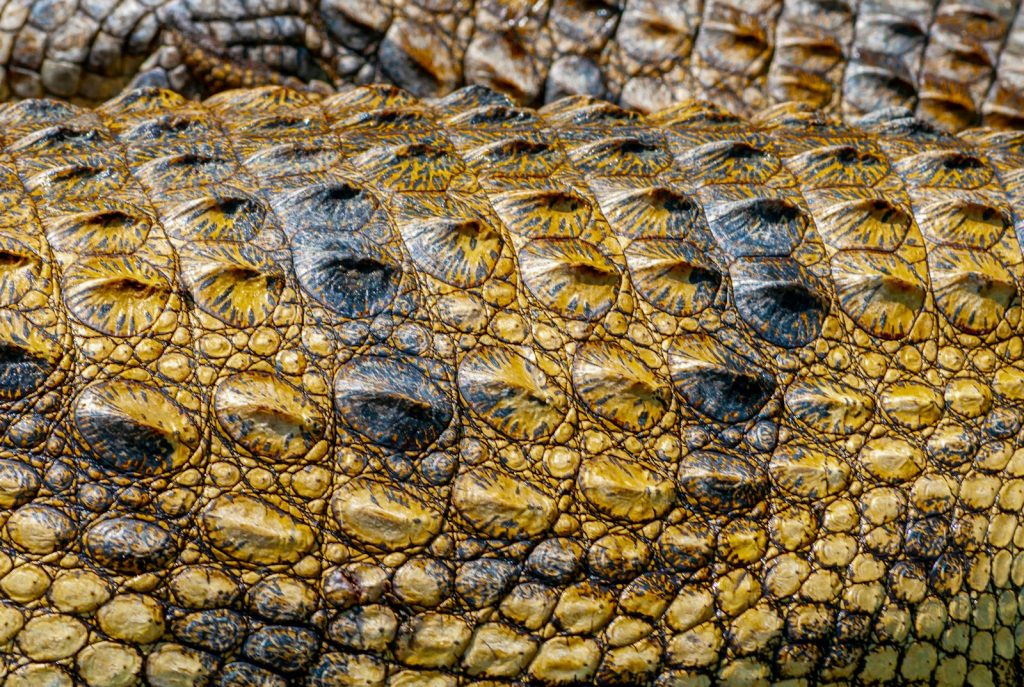
Honest sourcing note: “Crocodile”, “alligator” and “caiman” are different species. The premium crocodilian is saltwater crocodile (Crocodylus porosus); Nile crocodile (C. niloticus) is very high but usually below porosus; American alligator (Alligator mississippiensis) is a separate prized category; caiman is the entry tier. We label species accurately and never sell embossed calf as exotic. Genuine crocodilian is CITES-regulated (typically Appendix II, farmed/ranched, source codes C/F/R); international orders ship with documentation, and you are responsible for your country’s import rules — this is general information, not legal advice. Prices are indicative ranges (mid-2026); final pricing is by quote. Luxury houses are referenced only as neutral examples — we have no affiliation. We are an independent authority and sourcing desk and connect you to vetted makers.
A crocodile handbag is a women’s (or unisex) bag whose external panels are made from genuine crocodilian skin, cut and matched as the primary material—not embossed calf, not PU, and not “croc print”. In the 25–35 cm category, a true crocodile leather handbag usually means saltwater crocodile (Crocodylus porosus), Nile crocodile (C. niloticus), or American alligator (Alligator mississippiensis), built from one to two carefully matched belly-cut skins.
At Crocodile Leather Bags, we treat “crocodile” as a biological term, not a marketing adjective. Porosus, niloticus, alligator and caiman are different animals, different leathers and different price brackets—and we label them honestly.
—
What Is a Crocodile Handbag, Precisely?
A crocodile handbag in the modern luxury sense is:
– A structured handbag (usually 25–35 cm across the base)
– Outer body made primarily from genuine crocodilian leather
– Cut from the smooth belly or the more rugged “hornback” (back) section
– Built from one or more full skins, panel-matched for scale symmetry
That excludes:
– Embossed calf or goat with a crocodile pattern
– PU / PVC “croc print”
– Mixed bags where a small trim piece is crocodile and 95% is calf
If the main visual field of the bag isn’t real crocodilian leather, we do not call it a crocodile handbag.
A high-grade crocodile leather handbag in this size class (25–35 cm) typically uses:
– 1–2 premium belly-cut skins for front/back/side panels
– Head / tail trimmed away at the tannery
– Additional smaller pieces (interior tabs, trim) from offcuts
For collectors, the pillar shape in this category is the 25–30 cm top-handle handbag with a structured body and flap—think Hermès Kelly/Birkin “shadow”. We reference these only as public benchmarks; we have no affiliation with any maison.
—
Species: Porosus vs Niloticus vs Alligator vs Caiman
Different species age, tan and wear differently. Lumping them all under “genuine crocodile” is how disappointment starts.
Below is a factual comparison for bag-grade skins in the 25–35 cm handbag category.
| Species / Trade Name | Latin Name | Typical Tier for 25–35 cm Handbags | Grain & Feel | Common Uses |
|---|---|---|---|---|
| Saltwater / Porosus | Crocodylus porosus | Top tier (Hermès-level) | Very fine, tight scale pattern; supple but firm | Flagship women’s handbags, small leather goods |
| Nile / Niloticus | Crocodylus niloticus | Very high, slightly below porosus | Larger, more pronounced scales; soft, luxurious | Handbags, clutches, belts, footwear |
| American alligator | Alligator mississippiensis | Separate prized category, alligator-specific | Soft, rounded scales; often matte, very rich hand | High-end handbags, watch straps, wallets |
| Caiman | Caiman crocodilus & relatives | Lower tier for hard-use handbags | Stiffer, bony (osteoderms); less flexible | Entry-level bags, shoes, Western boots |
Porosus: The Reference Crocodile Handbag Leather
“Porosus” means saltwater crocodile, Crocodylus porosus. In the 25–35 cm crocodile handbag space it is:
– The most sought-after crocodile leather
– The reference point for ultra-high-end Hermès-tier bags
– Typically priced highest per cm of usable belly
Key traits:
– Very fine, tight scale pattern, especially on the central belly
– Discreet “pore” marks near the scale edges (hence porosus)
– Takes both matte and high-gloss (glazed) finishes exceptionally well
– Excellent strength-to-thickness ratio for structured bags
For a flagship porosus handbag, tanneries supply:
– Grade I or I–II matched skins
– Clean central belly, minimal insect marks or grain defects
– Controlled scale progression from center panel to the sides
Niloticus: High Luxury, Fractionally Larger Scale
Nile crocodile, Crocodylus niloticus, is also a genuine crocodile, farmed and tanned for high-end handbags.
Versus porosus:
– Scales are generally slightly larger and more pronounced
– Grain can show more visible “pebbled” texture on larger animals
– Price is usually below porosus, but still firmly in luxury territory
A well-cut niloticus crocodile leather handbag can rival porosus visually, especially in matte finishes where the scale shape reads clearly. Many collectors consider top-grade niloticus a sweet spot of look vs cost.
American Alligator: Not a Crocodile, But Equally Serious
American alligator, Alligator mississippiensis, is not a crocodile biologically, but often discussed in the same breath.
Essential points:
– Trade term is “alligator”, not “crocodile”
– Scales tend to be rounder and softer in shape
– Often tanned in rich matte or “soft gloss” rather than mirror-glazed
– Very supple; ideal for both handbags and watch straps
At the very top of the market, alligator handbags stand alongside porosus in prestige, though connoisseurs recognise them as separate categories, with distinct aesthetics and feel.
Our sister authority site, alligatorwatchstrap.com, covers alligator watch straps at the same factual level we maintain here for bags.
Caiman: Budget Exotic, Clear Limitations
Caiman—most commonly Caiman crocodilus and related species—sits clearly below porosus, niloticus and alligator:
– Cheaper raw skins
– Bony plates (osteoderms) give a harder, less flexible feel
– More prone to cracking if over-dried or bent sharply
– Frequently used in lower-priced “exotic leather handbag” lines
A well-tanned caiman bag can still be attractive, but it will not age or handle like porosus or alligator. We always call it caiman, never “premium crocodile” without species.
—
CITES Legality: Crocodile Handbags and International Trade
Most crocodilian species used for high-end handbags are regulated under CITES (the Convention on International Trade in Endangered Species of Wild Fauna and Flora).
This is not legal advice; regulations and enforcement differ by country. Always confirm details with your national CITES Management Authority or qualified customs broker.
CITES Appendix II and Farmed / Ranched Skins
Porosus, niloticus and American alligator used for luxury handbags are typically:
– Listed on CITES Appendix II (controlled trade, not an outright ban)
– Sourced from farms or ranches, not wild-taken for modern luxury bags
– Exported with CITES permits indicating source codes such as:
– C = Bred in captivity
– F = Born in captivity (F1 or later)
– R = Ranched (taken as eggs or juveniles, reared in controlled facilities)
A legitimate international shipment of crocodile handbags should have:
– Valid CITES export permits from the country of origin
– Any required import documents for the destination country
– Clear species labelling (porosus, niloticus, alligator, or caiman)
Red flags include vague invoices (“genuine crocodile handbag” with no species), no CITES documentation for cross-border sale where it is required, or misdeclared species.
Domestic vs Cross-Border Purchases
If you buy and use the bag within the same country:
– CITES paperwork may have been handled upstream (farm → tannery → manufacturer)
– Retailers in many jurisdictions are not required to hand you CITES docs for domestic use
If you plan to carry or ship a crocodile leather handbag internationally:
– You may need original or copy CITES permits and/or re-export permits
– Some regions (e.g., parts of the US, EU) have additional regulations or state-level rules
Ask your seller explicitly what CITES documentation exists and what they can supply. Serious makers and dealers are used to this question.
—
Cuts, Panels and Skins-Per-Bag: The Real Construction Story
The most misunderstood detail in crocodile handbags is how much leather—and how much editing—goes into a clean, symmetrical 25–35 cm bag.
Belly Cut vs Hornback
Two primary cutting styles:
– Belly cut: The skin is opened along the back, exposing the smooth central belly and flank scales.
– Hornback cut: The back is used, showing the raised osteoderm “horns” along the spine.
For classic structured handbags:
– 90%+ of high-end pieces are belly-cut
– Front and back panels use the central belly “crown” portion where scales are most even
– Sides, gussets, handles may use off-center or flank sections
Hornback is more common for more aggressive or casual designs: top-handle bags with a spine-center panel, smaller crossbodies with the back ridge showcased, or Western-influenced shapes. These use less symmetrical patterns by nature.
How Many Skins for a 25–35 cm Crocodile Handbag?
For a standard 25–35 cm crocodile leather handbag (classic trapezoid or rectangular profile):
– 1 large belly skin can technically cover the main exterior, but:
– Most high-end makers prefer 2 matched smaller skins for cleaner scaling and panel matching.
– Smaller, well-positioned skins often yield better aesthetics than stretching a single large one.
– Add separate smaller pieces:
– Closure straps, handle attachments, and some trim are cut from offcuts or secondary skins.
– Interior is usually calf, goat, or suede, not crocodile, except on ultra-bespoke builds.
Indicative pattern use:
– 1–2 Grade I or I–II belly skins for main body
– Possibly 1 lower-grade skin for internal trim, if all-exotic is requested
– Reinforcement materials (board/interlining) not counted as “skins” in pricing, but central to structure
Any claim that a full-size 30–35 cm structured handbag is made from “half a skin” is marketing spin, not construction reality.
Panel Matching and Scale Symmetry
Serious collectors judge crocodile handbags by panel matching:
– Front/back symmetry: Scales should graduate smoothly from center to edges, without abrupt size jumps.
– Left/right balance: The central line of scales should reasonably align across the flap and body.
– Skin pairing: When 2 skins are used, tanneries and workshops match size, scale shape and color tone.
Perfect mirror symmetry is impossible in a natural material. The goal is controlled, intentional asymmetry without visual distraction.
—
Finishes: Matte vs Glazed Crocodile Handbags
The same porosus or niloticus skin can look radically different depending on finish.
Matte Crocodile
Matte finish:
– Soft, low-sheen surface
– Shows natural grain and scale edges
– Ages with a subtle patina and darkening in high-contact areas
Collectors who prefer understatement and daily use often choose matte:
– Scratches can blend more easily with conditioning and wear
– Less “showy” than a mirror-glazed crocodile leather handbag
– Often seen on top-tier porosus and alligator handbags from neutral luxury examples like Hermès or high-end independent makers (no affiliation implied)
Glazed (High Gloss) Crocodile
Glazed finish:
– Achieved by polishing (often with agate or similar tools) plus finishing chemistry
– High gloss, mirror-like surface on the scales
– Makes colors appear more saturated and dramatic
Glazed porosus handbag builds are iconic in specific colors (public examples include bright reds, deep blues, jet blacks). Be aware:
– Glazed surfaces highlight scratches more starkly, especially on dark colors
– Slight handling marks are inevitable; light buffing can mitigate but not erase extensive abuse
Intermediate and Specialty Finishes
Between pure matte and mirror-glazed exist:
– “Soft gloss” or “satin” finishes
– Hand-tipped two-tone finishes accenting the scale edges
– Metallic, pearlised or antique finishes for niche builds
These are best considered case by case. We prioritise tanneries and workshops with proven finishing stability—no flaking, yellowing or rapid dulling under normal use.
—
Hardware, Lining and Interior Construction
The skin is only half the story. How the bag is built determines how it feels and holds up.
Hardware: Metals and Plating
For serious crocodile handbags, hardware is usually:
– Solid brass, steel or bronze cores
– Plated in:
– Palladium / rhodium tone (bright silvery)
– Ruthenium / gunmetal (dark grey)
– Yellow or rose gold colors (various karat-look platings)
Key points for collectors:
– Ask whether hardware is solid brass or a light alloy; weight and longevity differ.
– Check that screws, feet and strap rings are robust; thin, lightly plated parts age poorly.
– On OEM builds, hardware can often be specified or upgraded.
Linings: What’s Inside a High-End Bag?
Interior choices for a 25–35 cm crocodile handbag:
– Smooth calfskin lining:
– Traditional for structured “house-style” handbags
– Clean, slightly firm hand; hard-wearing
– Goat or lamb lining:
– Softer, slightly more luxurious feel
– Good in smaller compartments
– Suede or split:
– Tactile, but can mark more easily
– Often used for pockets, not the whole interior in structured bags
Full-exotic lining (crocodile inside and out) is possible but rarely practical:
– Greatly increases cost and weight
– Reduces resistance to sharp objects inside the bag
– Better reserved for ultra-collectible showpieces
Reinforcement and Structure
Inside the panels you’ll often find:
– Stiffeners (cardboard-replacement composites, leatherboard, or modern synthetics)
– Piping cords and edge reinforcements
– Stitching allowances and folded edges to protect the raw skin
Good construction:
– Keeps crocodile away from constant flexing at 90-degree angles
– Supports the handles at stress points
– Minimises unbacked, ultra-thin edges that might chip or curl
—
Grading and Quality: How to Read a Crocodile Leather Handbag
Crocodile skin grading happens at the tannery, typically on raw or crust skins before finishing.
Typical Grading Framework
While exact labels vary, a working description:
- Grade I
- Central belly area clean, minimal or no visible defects, suitable for flagship panels.
- Grade I–II / II
- Minor marks or small defects that can be cut around; ideal for quality handbags where patterns are cleverly laid out.
- Grade III and below
- More evident scarring, insect marks or scale irregularities; used for smaller goods or more rustic designs.
Expect top-priced porosus handbags to be predominantly Grade I / I–II in the visible belly sections.
Natural Marks vs True Defects
Not everything that looks “imperfect” is a defect:
– Slight asymmetry in scale size between left and right is normal.
– Faint growth marks at the edge of the belly are natural.
– Minor surface creasing near folds can be from use, not a tannery error.
Defects that should be disclosed on a premium build:
– Large scars crossing central belly scales
– Obvious insect or parasite marks within prime panel areas
– Visible over-sanding or thinning that flattens scale character
—
Pricing: What a Serious Crocodile Handbag Actually Costs
Raw skins, skilled labor, CITES compliance and rejects all feed into pricing. Any “full porosus handbag” priced like a basic calf bag deserves scrutiny.
All ranges below are indicative only, last verified June 2026, and always finalised by quote.
Artisan / Bespoke-Level Bags
For a high-quality 25–35 cm crocodile leather handbag built by a serious workshop from porosus, niloticus or alligator:
– Typical buyer-facing range: around USD $3,000 – $8,000
– Lower end: smaller sizes, simpler construction, less expensive species (high-grade niloticus or select alligator), matte finish.
– Higher end: porosus, complex structures, top-shelf finishing, demanding colors, extensive handwork.
Fully custom builds (special hardware, exotic lining, unique colors, or museum-grade panel matching) can exceed this, especially in porosus or rare alligator colors.
OEM / Private-Label Body Pricing
For brands, boutiques and designers commissioning OEM crocodile handbags:
– Typical per-bag OEM range for the main body: about USD $800 – $2,500
– Depends heavily on:
– Species (porosus vs niloticus vs caiman)
– Skin grade
– Finish and color complexity
– Order volume and pattern complexity
That does not include:
– Brand markups
– Import duties, VAT/GST or other local taxes
– Retail overheads
We always frame numbers as working ranges. Specific projects require a formal quote.
Caiman and Entry-Tier Exotic Handbags
Caiman handbags sit below the above figures, but exact ranges vary widely by maker, lining and hardware. If you see a “crocodile handbag” well under the porosus/niloticus ranges above, check carefully:
– Is it caiman?
– Is it a very small pouch rather than a 25–35 cm structure?
– Is it printed or embossed calf being sold as “croc-style” or “croc-effect”?
If in doubt, ask for species in writing.
—
Care and Longevity: Looking After a Crocodile Handbag
Crocodile and alligator are tougher than most people think—but not indestructible.
Basic Care Principles
– Avoid extreme dryness and heat:
– Keep away from radiators, hot car dashboards, or direct sun storage.
– Keep it dry:
– Light rain is survivable; wipe dry promptly with a soft cloth.
– Do not soak; do not use hairdryers or heaters to force-dry.
– Store correctly:
– Stuff with acid-free paper or a soft pillow form.
– Store upright in a breathable dust bag, not sealed plastic.
– Loosen straps and close hardware gently, not under tension.
Cleaning and Conditioning
– Routine cleaning:
– Wipe with a very lightly damp (almost dry) soft cloth.
– Avoid household cleaners, alcohol, or baby wipes.
– Conditioning:
– Use only products specifically formulated for exotic leathers or as recommended by the maker.
– Apply sparingly; over-conditioning can cloud a glazed finish or soften structure.
– Professional interventions:
– For deep scratches, color loss or water damage, consult a workshop familiar with crocodile/alligator, not just calf.
Usage Patterns
A porosus or alligator handbag can withstand regular rotation if:
– You rotate with other bags; don’t use the same exotic every single day for years.
– You keep sharp keys or objects in pouches, not loose in the main compartment.
– You avoid overloading beyond what the handles and structure were designed to handle.
Handled with basic care, a high-quality crocodile handbag should last decades.
—
Independent Authority & Sourcing Desk
Crocodile Leather Bags is an independent editorial and sourcing resource. Our roles:
– Editorial:
– Explain species, cuts, CITES context, grading and construction without marketing euphemisms.
– Call porosus “porosus”, caiman “caiman”, and embossed calf exactly that.
– Sourcing desk:
– Help collectors, designers and trade buyers find vetted, CITES-compliant workshops and OEM manufacturers for bespoke or wholesale crocodile and exotic-leather bags.
– We coordinate research, communication and expectations; partner workshops do the tanning and manufacturing.
– No one can pay to change what we publish; if you proceed with our partner they may pay us a referral fee at no extra cost to you.
If you’re planning a bespoke build, a capsule collection, or need an honest second opinion on a quote, you can plan your trip through the sourcing landscape with us—email or WhatsApp coordination is available for practical details.
—
How to Commission or Source a Crocodile Handbag Through Us
If you want more than generic catalog pages, prepare a brief that covers:
1. Species and Finish
– Species:
– Porosus (top-tier)
– Niloticus
– American alligator
– Caiman (only if you consciously want entry-tier exotic)
– Finish:
– Matte
– Glazed
– Soft gloss / specialty finishes
2. Size and Shape
– Base width: typically 25, 28, 30 or 35 cm for structured handbags
– Body style:
– Top-handle with flap
– Tote
– Crossbody
– Mini / micro
3. Color, Hardware and Lining
– Color family:
– Classic (black, brown, navy, anthracite)
– Neutrals (greige, taupe, cream)
– Strong color (red, green, blue, etc.)
– Hardware tone:
– Silver / palladium
– Gold / champagne
– Dark / gunmetal
– Lining:
– Calf, goat or suede, and in which color
4. Budget and Volume
– Single bespoke piece vs small batch vs full-scale wholesale
– Target per-bag budget in the realistic ranges described above
– Any deadlines for launches or personal events
With that, we can tell you:
– Which species/finish combinations are realistic
– Indicative price ranges (last verified June 2026) before formal quotes
– Typical lead times from approved design to finished bag
Use plan your trip as the starting point for your RFQ or bespoke enquiry; we coordinate via email and WhatsApp where helpful.
—
FAQs: Crocodile Handbags, Straight Answers
What is a crocodile handbag?
A crocodile handbag is a bag whose main exterior panels are made from genuine crocodilian leather—typically saltwater crocodile (porosus), Nile crocodile (niloticus), American alligator or caiman—cut from belly or back sections, not embossed calf or synthetic “croc print”.
Which species is best for a high-end crocodile leather handbag?
For classic 25–35 cm structured handbags, saltwater crocodile (Crocodylus porosus) is the top-tier crocodile, Nile crocodile (C. niloticus) is very high and close behind, and American alligator (Alligator mississippiensis) is a separate, equally serious luxury category. Caiman is genuine crocodilian but lower tier in flexibility and long-term refinement.
How many skins does a typical 25–35 cm crocodile handbag use?
Most high-end builds use one to two matched belly skins for the main exterior, plus smaller pieces or offcuts for trim. Using two matched skins often gives better scale symmetry and panel matching than stretching a single large skin.
How much does a real porosus or alligator handbag cost?
Indicative ranges, last verified June 2026: for serious artisan work in the 25–35 cm category, expect around USD $3,000–$8,000 retail, depending on species, finish and complexity. OEM bodies for brands typically run about USD $800–$2,500 per bag before retail markups, duties and taxes. Exact pricing is always by quote.
Is it legal to buy and carry a crocodile handbag?
Most crocodile and alligator handbags use farmed or ranched skins from CITES Appendix II-listed species, traded with CITES permits. Buying and using such a bag domestically is generally allowed, but cross-border sales and travel can require documentation. Regulations vary by country, so always check with your national CITES Management Authority or a qualified customs broker before importing or travelling with exotic leather.